

Table of Contents
- The Opportunity
- The Solution
- Process Transformation
- Technology Enablement
- People & Capability Development
- Performance & Governance
- The Impact
- The Team
How a paint manufacturing and distribution business strengthened warehouse discipline, improved stock visibility, and established a scalable inventory operating system
THE OPPORTUNITY
Moving from inventory uncertainty to operational control
As Shaji Paints expanded its manufacturing and distribution network across nine branches, inventory complexity increased faster than the controls required to manage it.
The business handled thousands of stock movements across manufacturing, warehouses, and branches. However, the processes governing how inventory was identified, moved, documented, and monitored had not evolved at the same pace.
An initial assessment established inventory accuracy at:
72.7%
The variance between physical and system stock was not caused by a single issue. It reflected interconnected operational gaps:
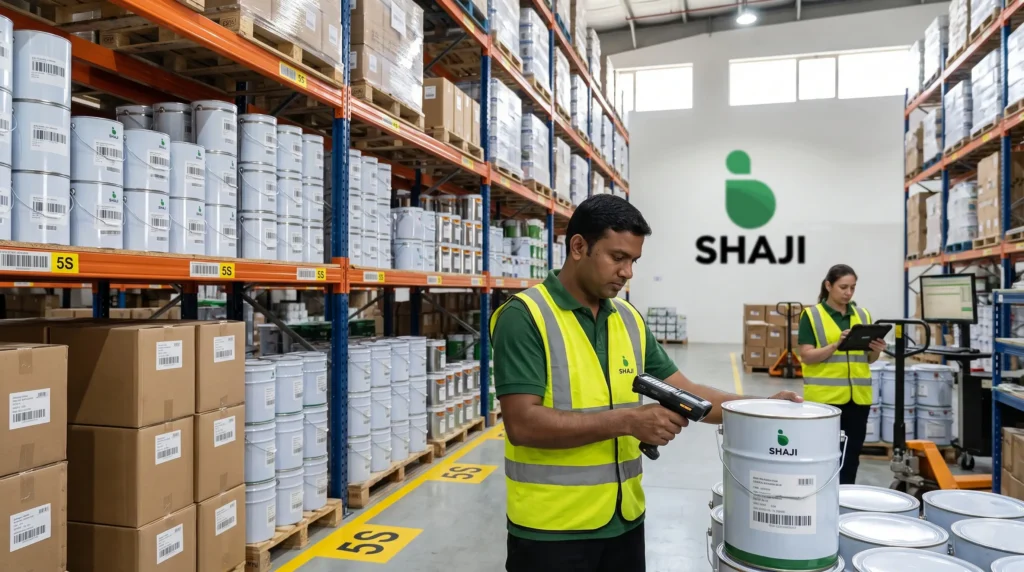
- Weak warehouse management and inconsistent 5S practices
- Improper product and storage-location identification
- Delayed posting of inventory documents
- Continued reliance on pen-and-paper records
- Duplicate item entries and poor product master data
- No gate-level verification of dispatch and receipt quantities
- Poorly defined inter-branch transfer processes
- Unclear accountability for transfer discrepancies
- No structured process, stock, or 5S audits
- No process-adherence metrics or KPIs linked to stock accuracy
These gaps reduced management’s confidence in inventory data, increased dependency on manual verification, and made replenishment decisions reactive.
The leadership team needed reliable answers to fundamental questions:
- Is the reported stock physically available?
- Is the right inventory available at the right branch?
- Where are stock-outs affecting customer commitments?
- Where is excess or ageing inventory locking up working capital?
- Which process failures are creating inventory differences?
- Who is accountable for resolving each exception?
The requirement was not simply to conduct another stock count. The business needed an operating system capable of sustaining inventory control as the organisation continued to grow.
THE SOLUTION
Building a scalable inventory operating system
Assured Grow worked with the organisation to address the root causes of inventory inaccuracy across four connected dimensions: Process, Technology, People, and Performance.
The transformation combined physical warehouse improvements, stronger transaction controls, barcode-enabled product identification, automated management visibility, clearly defined ownership, structured capability development, and measurable performance standards.
Process: Establishing physical and transactional discipline
The work began by mapping the complete inventory movement cycle—from receiving and storage to transfers, dispatch, receipt, and system posting.
This helped identify where physical movements were occurring without timely documentation, where responsibilities were unclear, and where inventory differences could enter the process.
The redesigned operating model included:
- Defined 5S and warehouse-organisation standards
- Standardised product and storage-location identification
- Clear material receiving and dispatch procedures
- Gate-level verification of dispatch and receipt quantities
- Defined timelines for posting inventory documents
- Control over pending and incomplete stock transactions
- Standardised inter-branch transfer procedures
- Dispatch and receipt acknowledgement requirements
- Tracking and closure of stock in transit
- Escalation procedures for transfer discrepancies
Product master data was reviewed to identify duplicate item entries, standardise product descriptions, and strengthen controls over new item creation.
Alongside stock-control improvements, the organisation introduced more structured replenishment practices, including minimum stock levels, reorder parameters, and exception-based reviews of fast-moving, slow-moving, and ageing inventory.
Together, these measures shifted inventory management from individual practices to a common operating model across all nine branches.
Technology: Strengthening identification and management visibility
Technology could not deliver reliable information until the underlying processes and data were corrected.
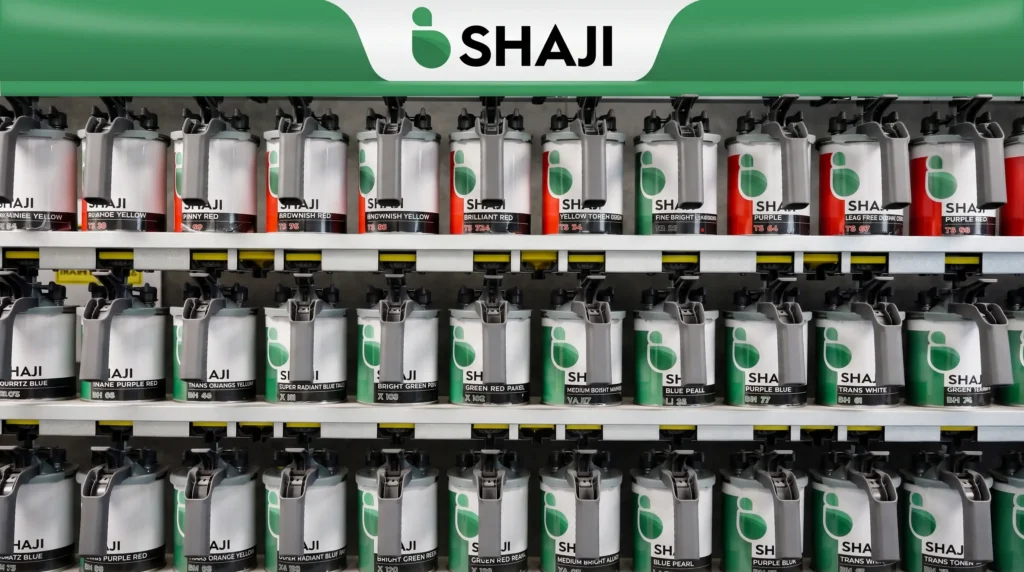
Following the improvement of product master data, the organisation adopted barcode technology for SKU identification. Standardised barcode-based identification helped teams distinguish products more accurately and reduced the risk of errors caused by inconsistent descriptions, duplicate item records, and manual product identification.
Automated dashboards were also created to provide structured visibility into:
- Branch-wise inventory positions
- Physical-versus-system stock accuracy
- Pending document postings
- Open inter-branch transfers
- Dispatch and receipt differences
- Inventory ageing
- Slow-moving inventory
- Stock availability and replenishment exceptions
- Process-adherence and audit results
The dashboards reduced dependence on fragmented spreadsheets, manual registers, and repeated branch-level follow-ups. They also created a common source of information for management, departments, and branch teams.
Technology became a management-control mechanism rather than merely a place to record transactions.
Management conversations began shifting from:
“What happened to the inventory?”
to:
“Where is the exception, what action is required, and who owns it?”

People: Building capability, ownership, and process adoption
Inventory accuracy was repositioned as a shared business responsibility—not solely a warehouse responsibility.
Ownership was clarified across the entire inventory movement chain:
- Warehouse teams became responsible for physical stock control and identification.
- Dispatch teams became accountable for quantity verification and documentation.
- Receiving branches became responsible for confirming quantities received.
- System users became accountable for timely and accurate transaction posting.
- Designated owners were assigned to investigate and close stock differences.
- Branch leadership became responsible for inventory and 5S performance.
To ensure that the redesigned processes were understood and consistently followed, the transformation included both live classroom training and on-the-job training.
Classroom sessions helped teams understand the complete inventory process, control requirements, individual responsibilities, and the operational impact of non-compliance. On-the-job training translated those requirements into daily working practices within warehouses and branches.
Clear and detailed learning content was also developed for adoption through the organisation’s Learning Management System. The content documented:
- Standard inventory procedures
- Roles and responsibilities
- Barcode and product-identification practices
- Dispatch, receipt, and transfer controls
- Document-posting requirements
- 5S standards
- Exception-handling and escalation procedures
This combination of classroom learning, practical coaching, and LMS-enabled content helped strengthen process adherence, support new-employee onboarding, and sustain capability beyond the initial transformation period.
Performance: Sustaining control through audits, KPIs, and Operational Control Towers
To make the improvement sustainable, the organisation introduced measures covering both inventory outcomes and process adherence.
Performance monitoring included:
- Inventory accuracy
- Timeliness of document posting
- Dispatch and receipt verification compliance
- Inter-branch transfer closure
- Stock availability
- Inventory ageing
- Process-adherence scores
- 5S performance
- Audit findings and closure rates
- Branch-level inventory performance
Regular stock, process, and 5S audits were introduced to identify control failures before they became significant inventory differences.
KPIs linked stock accuracy and 5S performance directly to branch, departmental, and individual accountability. This allowed management to assess not only the final stock result, but also whether the operational practices required to sustain that result were being followed.
A fixed monthly calendar of Operational Control Tower reviews was established to convert dashboard insights into management action. During these reviews:
- Performance was evaluated against defined KPIs.
- Branch and departmental exceptions were examined.
- Root causes were discussed.
- Corrective actions were assigned to named individuals.
- Target completion dates were agreed.
- Previous actions were reviewed through to closure.
The combination of automated dashboards and monthly Operational Control Towers created a consistent governance rhythm and brought greater departmental and individual accountability into inventory management.
The resulting control cycle was straightforward:
Measure → Identify → Assign → Correct → Verify → Sustain
THE IMPACT
Turning inventory discipline into measurable accuracy
The transformation improved inventory accuracy across the nine-branch network from:
72.7% → 96.9%
This represented an improvement of:
24.2 percentage points
The improvement was not the result of a one-time stock adjustment. It came from addressing the operating conditions that had allowed inventory differences to develop.
The organisation established:
- Stronger warehouse and 5S discipline
- Barcode-enabled SKU identification
- Clearer product and storage-location identification
- More timely inventory transaction posting
- Improved product master data
- Gate-level dispatch and receipt verification
- Greater control over inter-branch transfers
- Automated inventory and performance dashboards
- Monthly Operational Control Tower reviews
- Clear departmental and individual accountability
- Structured stock, process, and 5S audits
- Classroom and on-the-job training
- Detailed LMS-ready learning content
- KPIs linked to inventory accuracy and process adherence
Management gained greater confidence in inventory information and improved its ability to identify risks, assign corrective actions, and monitor performance across branches.
Employees gained clearer processes, practical training, and access to structured learning content that could support consistent execution over time.
Most importantly, inventory control moved from being dependent on individual knowledge and periodic stock counts to becoming a structured, technology-enabled, measurable, and scalable operating system.
THE TEAM